
What Happens to Tattoo Ink in Your Skin
A tattoo lasts because the ink is not sitting on the surface of the skin. It is placed deeper, in a layer that renews much more slowly than the skin you can see and touch.
That simple fact explains why tattoos can stay visible for years, why they may soften or blur over time, and why laser tattoo removal takes more than one treatment. The body does respond to tattoo pigment, but it cannot easily clear every particle on its own.
This article is for general education only and is not medical advice. For concerns about tattoo healing, skin reactions, or removal, speak with a qualified health or skin care professional.

Your skin renews itself, but not all layers behave the same way
Skin is active tissue. It protects the body, helps regulate temperature, senses touch, and repairs itself after injury. It also renews its outer surface constantly.
The key to understanding tattoo permanence is knowing the difference between the main layers of skin.
The epidermis is the outer renewing layer
The epidermis is the thin, outer layer of skin. It forms the barrier between the body and the outside world.
Cells in the lower part of the epidermis gradually move upward. As they rise, they mature, flatten, and eventually shed from the surface. This turnover is one reason small surface marks, flakes, and minor abrasions can disappear with time.
If tattoo ink stayed only in the epidermis, the design would not last. Much of the pigment would leave as the outer skin renewed itself.
That is not how tattooing works.
The dermis is deeper and more stable
Under the epidermis sits the dermis. This layer contains collagen, blood vessels, nerves, sweat glands, hair follicles, and immune cells. It is thicker and more stable than the epidermis.
The dermis still changes. Skin ages, heals, stretches, scars, and responds to inflammation. But it does not shed in the same surface-level way as the epidermis.
Tattoo needles are designed to pass through the epidermis and deposit pigment into the dermis. That placement gives the tattoo its staying power.
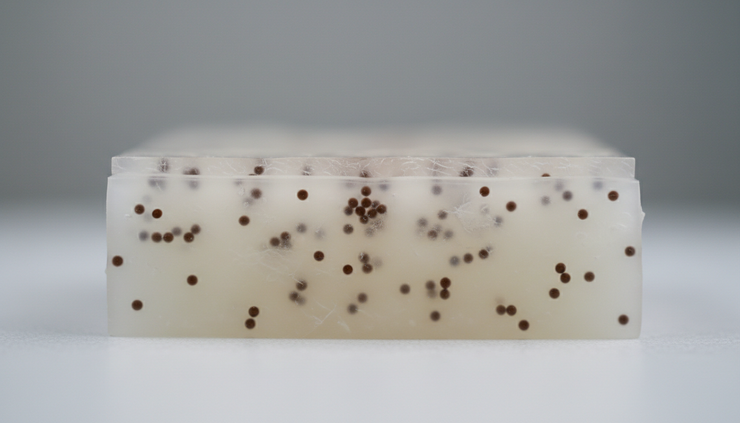
A good way to picture it is to imagine writing on a sheet of paper versus placing color inside a sponge. Marks on the surface can rub away. Pigment embedded deeper in the material stays visible for much longer.
Where tattoo ink goes during tattooing
Tattooing is controlled skin injury. A tattoo machine moves needles up and down quickly, puncturing the skin many times. With each pass, it carries tiny amounts of pigment through the epidermis and into the dermis.
The artist’s technique matters. Needle depth, skin type, placement on the body, aftercare, and the ink itself all affect how the healed tattoo looks.
If the pigment is placed too shallow, more of it may be lost as the skin heals. If it is placed too deep, the ink can spread more than intended and create a blurred effect. When the pigment lands in the right layer, the design heals into a visible, lasting tattoo.
The body treats tattooing like an injury
During tattooing, the skin barrier breaks repeatedly. The body responds right away.
Blood and plasma may rise to the surface. Inflammatory cells move into the area. The skin becomes red, warm, swollen, or tender as it begins the healing process. These reactions are part of normal wound repair, though severe pain, spreading redness, pus, fever, or worsening swelling should be checked by a professional.
As the tattoo heals, the epidermis repairs the surface. Scabbing, peeling, and flaking can happen. Some excess pigment may leave with fluid or crusting during this phase, which is one reason fresh tattoos often look darker or sharper than healed tattoos.
The pigment that remains in the dermis is what forms the long-term tattoo.
The healed tattoo is a balance between pigment and repair
Once healing settles, the tattoo is no longer an open wound. The skin has repaired the surface, but pigment remains inside the dermis.
Some pigment particles sit within skin cells. Some remain in the surrounding dermal tissue. The immune system continues to interact with the pigment, but slowly. This is why tattoos are permanent, yet not completely unchanged.
Over the years, a tattoo may:
Fade slightly
Lose crisp edges
Spread or blur in small ways
Look different as skin texture changes
Change appearance after sun exposure or skin injury
A tattoo can last a lifetime, but it lives inside living tissue. That tissue keeps ageing and responding to the world around it.
What your immune system does with tattoo pigment
Your body does not see tattoo ink as decoration. It sees it as foreign material.
Once pigment enters the dermis, immune cells move in. One key group is macrophages, which help clean up debris and respond to invaders. These cells try to engulf, or swallow, pigment particles.
Some smaller particles may be processed and carried away through the body’s waste-clearing systems. Some may travel to nearby lymph nodes. This does not mean the whole tattoo disappears, because many pigment particles are too large or too difficult for the body to remove efficiently.
Larger particles can remain trapped in the dermis. Some stay inside cells. Others sit within the surrounding tissue.
That is the main reason a tattoo can remain visible for so long.
Tattoo permanence is not a sign that the skin stops renewing. It is a sign that the pigment is placed in a deeper layer where the body can only clear it slowly and incompletely.
Pigment can move from cell to cell
A common question is, if immune cells engulf ink, why does the tattoo not vanish when those cells die?
Research suggests part of the answer may involve pigment being released and recaptured. When a pigment-containing immune cell dies, nearby cells can take up the released pigment again. This creates a slow cycle where the ink remains in roughly the same area.
The result is stable enough to keep the tattoo visible, but not perfectly fixed. Over time, small shifts in pigment placement can contribute to softened lines.
Not all ink particles behave the same way
Tattoo inks vary in color, particle size, composition, and how they respond to the body. Black ink often contains carbon-based pigment. Other colors may use different compounds.
This matters because pigment particles do not all break down or clear in the same way. Some colors are known to respond differently during fading or laser removal. The depth and density of the tattoo also change how the body interacts with the ink.
A fine-line tattoo, a dense black tribal tattoo, and a multi-colour sleeve do not ask the skin to handle the same pigment load.

Why tattoos fade even when they are permanent
A tattoo can be permanent and still fade. Those two ideas do not conflict.
“Permanent” means the body cannot easily remove all the pigment on its own. It does not mean the tattoo will look freshly done forever.
Several factors can change how a tattoo looks over time.
Sun exposure affects the look of tattooed skin
Ultraviolet light can affect both skin and pigment. Repeated sun exposure may contribute to fading and make lines look less distinct. It can also change the surrounding skin, which affects contrast.
A tattoo with strong contrast against healthy skin tends to look clearer. If the surrounding skin becomes sun-damaged, dry, or uneven in tone, the tattoo can appear duller.
Sunscreen and protective clothing can help preserve the look of healed tattoos. This is especially useful for tattoos on areas that get frequent sun, such as forearms, shoulders, hands, ankles, and the upper back.
Skin changes over time
Skin is not a static canvas. It stretches, relaxes, scars, tans, lightens, dries out, and loses some elasticity with age.
A tattoo on an area that changes shape can change too. Weight changes, pregnancy, injury, surgery, and natural ageing can all affect how a design sits in the skin.
This does not mean tattoos will always distort dramatically. Many age well. But the skin’s structure plays a real role in how crisp or soft a tattoo appears years later.
Healing affects the final result
The first few weeks matter. Picking scabs, scratching, soaking a fresh tattoo, or exposing it to too much sun can affect healing. Infection or heavy irritation can also change how pigment settles.
Even with excellent aftercare, the healed tattoo usually looks slightly different from the fresh tattoo. The surface skin repairs itself over the pigment, which can soften the initial shine and intensity.
Tattoo pigment is different from natural skin pigmentation
Tattoo pigment and natural skin pigmentation can both affect skin color, but they are not the same thing.
Natural skin color mainly comes from melanin, a pigment made by cells called melanocytes. Melanin helps protect the skin from ultraviolet radiation. It is part of the body’s normal biology.
Tattoo ink comes from outside the body. A needle places it into the dermis, where the immune system treats it as foreign material.
This difference matters when thinking about skin tone, hyperpigmentation, and tattoo visibility. Natural pigment develops through skin cells and biological signals. Tattoo pigment is deposited material that the body tries to manage after it enters the skin.
If you want to understand the difference more clearly, learning about skin pigmentation can help explain how melanin develops, why dark spots form, and how natural color differs from implanted pigment.
Natural skin pigmentation | Tattoo pigment |
Produced by the body | Introduced from outside the body |
Mainly linked to melanin | Made from tattoo ink particles |
Found through normal skin biology | Deposited by needles into the dermis |
Can change with sun, hormones, inflammation, and genetics | Can fade, spread, or break down slowly over time |
Part of the skin’s natural color system | Treated by the body as foreign material |
This distinction also matters for laser treatments. Lasers that target tattoo pigment and lasers that target unwanted skin pigmentation are not always used in the same way. The target, settings, risks, and expected results can differ.
How this explains laser tattoo removal
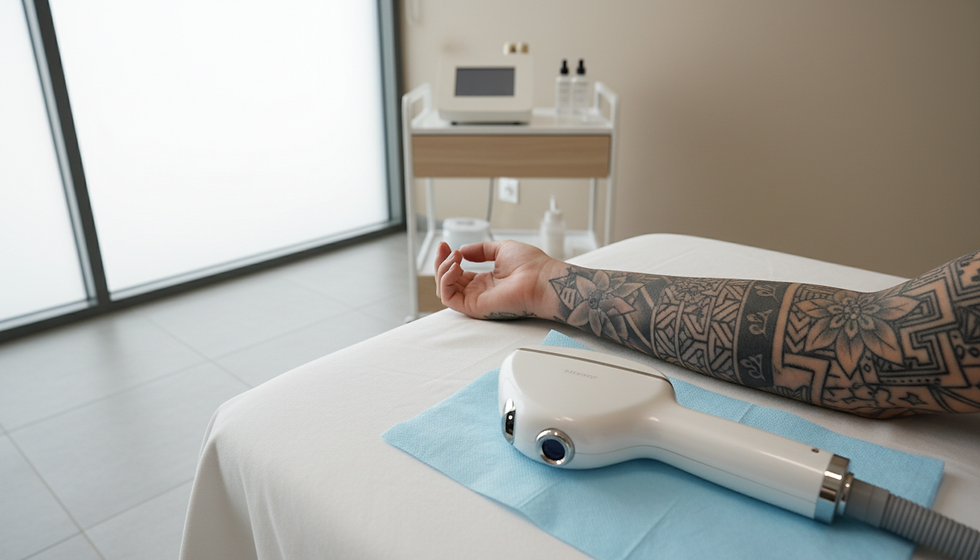
Laser tattoo removal works because tattoo ink is trapped in the skin in particle form. The goal is to break larger pigment particles into smaller fragments that the body can clear more easily.
A laser delivers short bursts of energy into the tattooed skin. Different wavelengths target different pigment colors. When the ink absorbs the laser energy, the particles heat and fragment.
The body then uses its natural clearing processes to remove some of those smaller fragments over time.
This is why removal is gradual. A tattoo usually cannot be cleared in one session because:
The ink sits at different depths
Pigment particles vary in size
Colors absorb laser energy differently
The body needs time to process fragmented pigment
Skin needs time to recover between sessions
Older, layered, or dense tattoos may respond more slowly
Laser treatment does not erase ink like wiping marker from glass. It helps the body do something it could not do well on its own.
Why some tattoos are harder to remove
Several features can make removal more complex.
Dark black ink often responds well to certain lasers because it absorbs a broad range of light. Some colors may need specific wavelengths. Dense tattoos may contain more pigment to break apart. Cover-up tattoos can have multiple ink layers, making treatment less predictable.
Skin tone also matters. Since lasers interact with pigment, providers must consider the natural melanin in the skin as well as the tattoo ink. The goal is to target the tattoo while reducing the risk of unwanted lightening, darkening, blistering, or scarring.
This is one reason laser tattoo removal should be assessed by someone trained to evaluate both tattoo characteristics and skin type.
Fading is still an immune process
The laser starts the change, but the body completes much of the clearing.
After laser energy breaks pigment apart, immune cells and the lymphatic system help process the fragments. This takes time. A tattoo may continue to fade between appointments as the body responds.
The same immune system that could not remove the original large particles may clear smaller fragments more effectively after laser treatment.
That is the link between tattoo permanence and tattoo removal: both depend on particle size, placement in the dermis, and the body’s ability to clear foreign material.
What to take away
Tattoo ink lasts because needles place pigment into the dermis, below the constantly renewing epidermis. The body recognizes that pigment as foreign and tries to clear it, but many particles are too large or too stable to remove fully on their own.
That is why tattoos can stay visible for years, yet still fade, soften, or change as skin ages and the immune system slowly interacts with the ink.
The same science explains laser tattoo removal. Lasers break larger pigment particles into smaller pieces, then the body gradually clears what it can. A tattoo is not just ink in skin. It is pigment, placement, healing, immune response, and time, all working together under the surface.


Comments